

Multilingualism and language diversity for inclusion in education: brief on inclusion in education
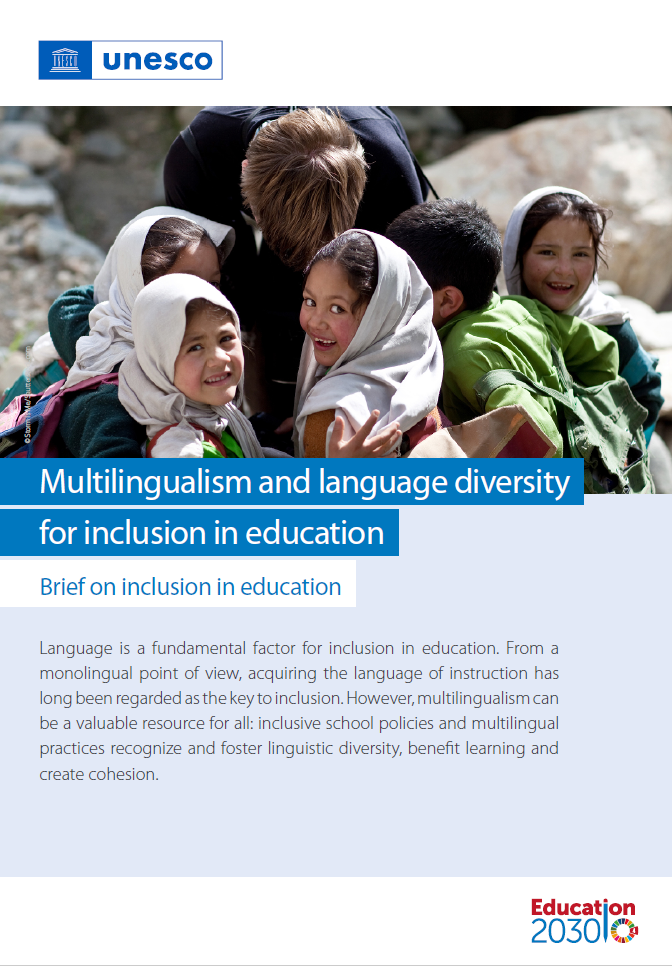
Language is a fundamental factor for inclusion in education. From a monolingual point of view, acquiring the language of instruction has
long been regarded as the key to inclusion. However, multilingualism can be a valuable resource for all: inclusive school policies and multilingual
practices recognize and foster linguistic diversity, benefit learning and create cohesion.
long been regarded as the key to inclusion. However, multilingualism can be a valuable resource for all: inclusive school policies and multilingual
practices recognize and foster linguistic diversity, benefit learning and create cohesion.
The brief is divided into three sections:
The Importance of language for inclusion with examples of practices on multilingualism and languages of instruction in pedagogy
The challenges to multilingualism
Policy recommendations
More
Year:
Organisation:
UNESCO
Keywords:
multilingualism, linguistic diversity, inclusion in education
Marginalized & Vulnerable group:
All
Topic:
Inclusive Pedagogy & Practices, Language of Instruction
Level of Education:
Across the education sector
Type of Resources:
Research & Policy Papers
Country/Region:
All, Africa, Arab States, Asia & the Pacific, Europe & North America, Latin America & the Caribbean
Language of Publication:
English